Mahindra Tractor Parts Manual: Your Key to Efficiency and Sustainability
Your Mahindra tractor is a vital investment, and its longevity directly impacts your farm's productivity and profitability. Mastering your Mahindra tractor parts manual is key to maximizing its lifespan, minimizing downtime, and fostering sustainable farming practices. This comprehensive guide will empower you to navigate your manual effectively, troubleshoot common issues, and improve overall tractor efficiency. Did you know that proper maintenance, as detailed in your manual, can increase your tractor's lifespan by up to 20%? For additional resources, check out the Mahindra Attachments Guide.
Finding Your Mahindra Tractor's Manual: The First Step
Before you can begin maintenance or repairs, you must locate the correct parts manual for your specific Mahindra tractor model. Each model has a unique design, and using the wrong manual can lead to inaccurate information and potentially costly mistakes.
The official Mahindra website is your primary resource. These manuals are usually downloadable and organized by model number. Your local Mahindra dealership is another excellent resource, offering assistance in identifying the correct manual for your specific tractor. If you're unsure of your tractor's model number (a common occurrence), locate the identification plate, usually found on the tractor's frame. This plate contains the crucial model number needed to locate your manual.
Mastering Your Mahindra Tractor Parts Manual: Beyond Just Pictures
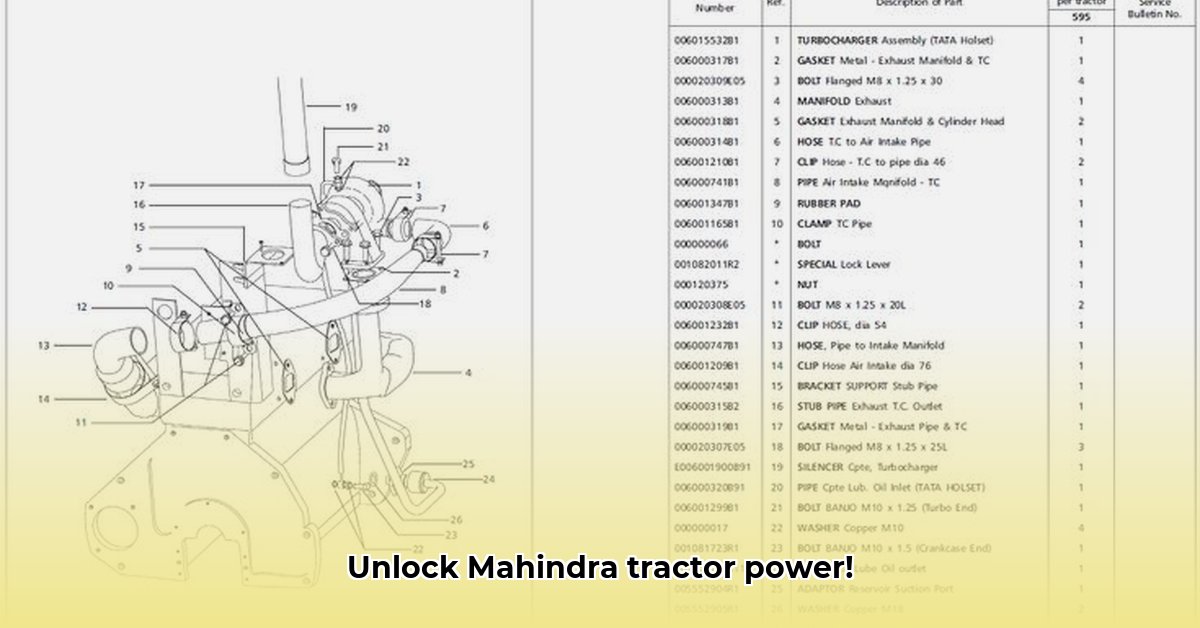
Your Mahindra parts manual is more than just a collection of pictures; it's a comprehensive guide to your tractor's inner workings. It contains detailed diagrams, part numbers, and descriptions that can significantly reduce downtime and prevent costly repairs. Most manuals include a table of contents and an index for efficient navigation. Exploded diagrams visually illustrate how parts fit together, simplifying understanding of complex mechanical systems. Crucially, each part includes a unique part number necessary for ordering replacements.
Troubleshooting with Your Manual: A Step-by-Step Approach
Encountering a mechanical issue? Your manual provides a structured approach to troubleshooting. Most manuals have dedicated troubleshooting sections, guiding you through a series of steps to diagnose and resolve common problems. These sections often feature visual aids to clarify processes. Remember: always prioritize safety! Disconnect the battery before undertaking any repairs involving the electrical system. Following the manual's instructions ensures you avoid costly errors and potential safety hazards.
Safety First: Always Your Top Priority
Safety is paramount. Always read and understand the safety precautions detailed in your manual before beginning any maintenance or repair work. Appropriate personal protective equipment (PPE), including sturdy work boots, gloves, and eye protection, is crucial. Never work on a running engine; always ensure the engine is turned off and cooled down before performing any maintenance. Furthermore, the manual specifies correct jack points for working under your tractor; adhering to these instructions is crucial for your safety.
Ordering Parts: Accuracy is Key
Once you've identified the faulty part and located its unique part number in your manual, ordering the replacement is straightforward. Use the exact part number when contacting your Mahindra dealership or an authorized supplier. While online retailers may offer Mahindra parts, always verify their authenticity to prevent purchasing counterfeit or incompatible components. This step ensures compatibility and prevents further issues.
Preventative Maintenance: A Little Prevention Goes a Long Way
Preventative maintenance is crucial for extending your tractor's lifespan and maintaining optimal performance. Your manual outlines a recommended maintenance schedule that includes regular oil changes, filter replacements, and lubrication. Following this schedule religiously prevents small issues from escalating into costly repairs. This proactive approach, as highlighted by Dr. Anya Sharma, Agricultural Engineering Professor at Purdue University, “significantly reduces operational costs over time and contributes to more environmentally sound farming practices.
Mahindra's Commitment to Sustainability: Your Part in Progress
Mahindra's commitment to sustainable agriculture is evident in its focus on building durable, long-lasting tractors. Consistent maintenance, guided by your manual, directly contributes to this sustainability initiative by extending the tractor's productive life, minimizing waste, and reducing the need for frequent replacements. This aligns with Mahindra's stated goal of supporting environmentally conscious farming.
Technological Advancements: Looking Ahead
Your manual isn't solely focused on current capabilities; it can also guide you towards potential upgrades. Does your manual highlight options for fuel-efficient components or other technological advancements? Understanding your tractor's capabilities enables you to plan for future improvements, further enhancing efficiency and sustainability.
Using Your Mahindra Tractor Parts Manual: A Summary
| Step | Description | Expected Outcome |
|---|---|---|
| Locate the Right Manual | Find the specific manual for your tractor model. | Access to accurate parts diagrams and information. |
| Understand the Layout | Familiarize yourself with the manual's structure and indexing. | Efficient navigation and information retrieval. |
| Master Troubleshooting | Utilize the troubleshooting sections to diagnose and fix problems. | Reduced downtime and repair costs. |
| Order Parts Correctly | Use part numbers from the manual for accurate ordering from approved suppliers. | Ensuring correct part fit and function. |
| Follow Maintenance Plan | Adhere to the recommended maintenance schedule. | Prolongs tractor lifespan and minimizes major issues. |
By effectively utilizing your Mahindra tractor parts manual, you'll ensure your tractor's smooth operation, contributing to a more efficient and sustainable agricultural operation. Remember, a well-maintained tractor translates to increased productivity and minimized expenses!